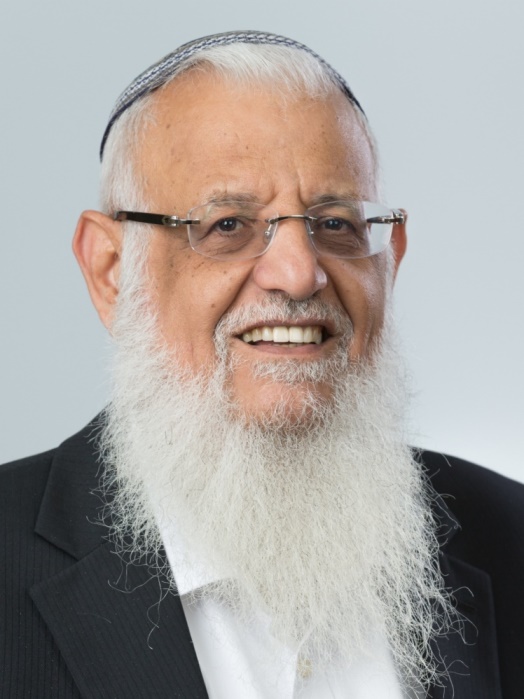
He Who Is Diligent About Chanukkah Candles And Shabbat Candles
הרב עמרי קראוס
We are commanded three Mitzvot which involve lighting candles, one Mitzvah D'Oraita and two Mitzvot D'Rabanan.
At the moment we do not merit to fulfill the Mitzvah D'Oraita – lighting the candles of the Menorah in Beit HaMikdash, and we pray that HaShem will return the service to its place soon and in our days. However, from Rabbinic enactment we have the Mitzvot of Chanukkah candles and Shabbat candles.
The Rambam generally does not "appraise" Mitzvot, however regarding lighting Chanukkah candles he makes the exceptional statement: "The Mitzvah of the Chanukkah candle is a very beloved Mitzvah…"
What is the Rambam's source for this? The Maggid Mishnah quotes the Gemara in Masechet Shabbat 23: "Rav Huna said: one who is accustomed to the Chanukkah candle will have sons who are Talmidei Chachamim."
However, the reading we have says: 'one who is accustomed to the candle' and it does not specify that it is speaking about the Chanukkah candle. And in fact, Rashi explains that it is referring to both types of candles: "sons who are Talmidei Chachamim – as is written (Mishlei 6) "'As a Mitzvah is a candle and Torah is light' and by virtue of the Mitzvah candle of Shabbat and Chanukkah comes the light of the Torah."
What is the connection between the candles of Chanukkah and Shabbat and sons who are Torah scholars?
We can explain this by way of a drash based on a close reading of the Gemara: The Gemara mentions additional "segulot" (practices which bring about positive results): "Rav Huna said: One who is accustomed to candles will have sons who are Torah scholars, one who is careful about Mezuzah will merit dirah na'ah (nice living quarters), one who is careful about Tzitzit will merit Tallit na'eh (nice clothing) and one who is careful about Kiddush haYom merits to fill jugs with wine."
And the question arises: in the other examples the Gemara uses the expression "careful about," so why does it use the words "accustomed to" when referring to the candle?
Perhaps we can say that the meaning of "accustomed to candles" is not "lighting candles" but it means that he himself is like a candle. And just like the flame of a candle always ascends, is always in motion and is never frozen in place – so his sons will learn and will want to be like him, with aspirations to ascend upwards.
Shlomo HaMelech says in Mishlei (20:27) "for man's soul is HaShem's candle"… the soul must be like a candle which constantly strives to ascend, and this is the way to grow and become a Talmid Chacham.
Chanukkah commemorates the war which the Maccabees waged against the Greeks who wanted to "make them (the Jews) forget Your Torah." When Chazal enacted a memorialization and publicization for this miracle, they prescribed three courses: the minimum obligation is one candle in each home, the Mehadrin light a candle for each member of the household, and the Mehadrin min HaMehadrin, according to Beit Hillel, add one candle each day. And all of Am Israel practice according to Mehadrin min HaMehadrin since this is the way to combat against the forgetting of the Torah, to add and add - much more than what is obligatory, to desire and aspire constantly to ascend, far beyond what is required by the minimal obligation.
And therefore it may follow that he who is careful regarding the Chanukkah candle will have sons who are Torah scholars, since he educates them that we must constantly do more, and this is what instills in them the love of Torah.
In Ein Aya"h, HaRav Kook gives another explanation for the need to be "accustomed" to a candle. One who is accustomed to light will find it difficult to sit in the dark, since he already recognizes the value of the light and knows how good it is. "And behold, a person's being accustomed to the candle has the effect that he will feel how good the light is, and how negative it is to sit in the dark. And were he not accustomed to it, he would not feel this so strongly, and he would consider the light only to be an enhancement.
But this is the psychological nature of man: to love light after he has become accustomed to it, and habitualization will fix this characteristic in its natural place."
And so it is regarding the Torah: only one who recognizes the value of the Torah will pursue it and attain it "and this depends only upon the level of his recognition of the light of the Torah as a necessity, to the point that one who lacks it resembles one who sits in the dark in comparison to one who is already accustomed to its light and appreciates the excellence and quality of the good light."
As the Rambam says, in the laws of (unintentional) murderers: "A (Torah) student who is exiled to a city of refuge, his Rav is exiled with him, as the Torah says "and he will live" – you must provide him with the means to live, and without study, the life of men of wisdom and men who seek wisdom resembles death."
According to the simple meaning, we can explain the words of the Rishonim in another way. "One who is accustomed to candles" does not necessarily refer to Shabbat candles and Chanukkah candles, but to all the candles which one lights.
The Rambam writes about the importance of Torah study at night: "even though there is a Mitzvah to study Torah during the day and night, the majority of one's wisdom is learned at night, and therefore he who wishes to merit the crown of Torah must be diligent all his nights, and must not lose even one of them to sleep or eating and drinking and conversation, etc. Only (he must utilize them) for Torah and words of wisdom. The Sages said that the song of the Torah is only at night, as is written: "Arise and sing at night." And every one who involves himself with Torah at night, 'a strand of kindness' – meaning blessing and abundance – devolves upon him during the day, as it says: 'During the day HaShem will command His kindness upon me and at night His song is with me, a prayer to the G-d of my life.'" And therefore, it is difficult for one who does not have a candle to learn at night; however, one who is accustomed to candles can sit and learn Torah, and consequently will merit to have sons who are Talmidei Chachamim.
However, one question remains unanswered: why does the Gemara emphasize that one's sons will be Torah scholars, and not he himself?
Apparently there is an additional depth here.
The main reason for lighting Shabbat candles is Shalom Bayit (domestic peace) and Oneg Shabbat (enjoyment of the Shabbat) as well as honoring the Shabbat, whereas the main purpose of Chanukkah candles is publicizing the miracle.
One who studies Torah can feel that this is a life which involves great dedication and self-sacrifice; however, his children may not appreciate its great importance and will regard this as a difficult life and will not necessarily want to follow in their father's path.
And therefore it is critical that the Torah scholar be meticulous about Shabbat candles, about Shalom Bayit and Oneg Shabbat, and through this his children will learn the lesson that a life of Torah incorporates true peace and enjoyment as well.
Similarly, occasionally a scholar can appear to be learning only for himself; however, by being thorough about Chanukkah candles, by desiring to publicize the miracle, the children will learn that the purpose of Torah study is to spread the light in Am Israel.
This way, G-d willing, the children will desire to walk in the path of their parents and to grow in Torah.
השיעור ניתן בכ"א כסלו תשפ"ו
קוד השיעור: 9592
לשליחת שאלה או הארה בנוגע לשיעור:
.jpg)
.jpg)