
True Justice
 Back to Main Page
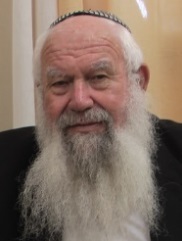
By: Rav Omri Kraus
True Justice
Parshat Yitro
HaRav Omri Kraus
In order for a Dayan (judge) to make a verdict based upon absolute truth, knowing the Halachot alone is not enough.
Yitro observes Moshe Rabbenu judging Israel with great dedication: "And the next day, Moshe sat to judge the nation, and the nation stood over Moshe from the morning to the evening." Yitro understands that this method has to be changed: "You will certainly be worn down, both you and the nation which is with you, since the thing is too heavy for you, you will not be able to do it by yourself."
As a result, Yitro recommends to Moshe to appoint judges. He does not merely suggest designating judges, but in addition he specifies the criteria for these judges: "And you will seek from all the nation men of valor, who are G-d fearing, men of truth and who hate illicit gain."
Dayanim must possess these four qualities, and it is obvious that these attributes are in addition to knowing the Halacha ("Bring yourselves smart and wise men, renowned in your tribes, and I will put them as your leaders" Devarim 1:13) The need for these qualities is very clear, since were we to ask: 'why would a judge not rule according to the truth?' apparently there can be three reasons:
- A judge might be afraid of one of the litigants – and therefore the judges must be "men of valor." Rashi interprets this as wealthy men, however the Rashbam defines this as "men of wealth and courage who will not fear any man."
- A judge might take a bribe – and therefore the dayanim must be sonei betza (men who hate immoral profit).
- A judge might not comprehend the importance of his duty and may do his job negligently, without investigating thoroughly for the truth – and therefore the judges must be "G-d – fearing" and understand the significance of sitting in judgment.
Therefore, since we have identified the factors which could lead a judge astray from the path of truth, and now, since the judge possesses the abovementioned qualities, he will certainly judge according to the truth of the Torah. So what does the Torah mean by saying that the judges must also be "men of truth"?
- Rashi explains that the explanation is "men of trust" meaning that their words are heeded.
This is an important and central point, as the power of the Beit Din stems from the trust the public has in it. When the community believes in the Beit Din, it will heed its rulings. Therefore the court must be authoritative, and one which inspires confidence, meaning that the litigants will trust in it, and consequently they will listen to it. (And there are interpretations which say: men who trust in HaShem, and therefore they themselves are worthy of trust.)
- There could be another explanation for this. It is possible that a person has no reason in the world to lie, and he is not interested in lying, and nevertheless his is not "a man of truth." In other words, it is not black and white that one is either a liar or a man of truth – there is a middle ground. A man of truth is one who loves truth and searches for it. And as Rabbenu Bechayei says: "And they also must be men of truth, meaning that they love truth and adhere to it, so as not to tolerate anything besides it, and will not accept a fraudulent claim."
The Gemara in Shabbat 10a tells us that Moshe Rabbenu passed judgment "emet l'amito" (absolute truth). What is the meaning of "emet l'amito"? The Tosafot explain that this means a ruling which is not deceived, and this refers to the Gemara in Shavuot 30b "From where do we know that a judge who knows that a case is fraudulent cannot say: since the witnesses testified, I will rule (according to their testimony) and the yoke will be around their necks (meaning: I did my job, and the responsibility for fraud is on the heads of the witnesses)? The verse comes to teach us: distance yourself from a lie" meaning that the judge must be absolutely convinced when he passes a ruling. And even if from a procedural point of view the judge can rely on the testimony of two witnesses, we demand from the judge that the ruling be absolutely truthful.
When we see all the qualities required of a dayan, we can ask: wouldn't it be better if Moshe Rabbenu was the one to judge the nation? We have no one who loves truth like Moshe, we have no one who inspires trust and confidence like Moshe, so which judge do we have like Moshe Rabbenu?
The Rashbam explains that the nation as well benefitted from the appointment of judges "and also this entire nation, which is standing over you from the morning to the evening, will come quickly, every man to his home, in peace." When Moshe Rabbenu judged alone, the legal process was prolonged. Yes, we are commanded "be patient in judgment" but a case which is delayed too long, this is called inui hadin (protracting the judgment) and this blemishes the truthfulness of the verdict. (As it is said: justice delayed is justice denied.)
The Ramban explains that when the courts are unavailable, this causes an increase in injustice: "and the reason for 'and they will judge the nation at all times' (says Yitro) is that when they will have many judges, a person who is wronged can come to a judge at any time and find him accessible, for they cannot approach you (Moshe) at any moment because of the great multitude of people who are before you, and the great burden which is upon you, and many of them will suffer the wrongdoing which is done to them because they will not have the opportunity to tell you, and they will not want to stop working at their trade and commerce until you will be available to receive them. And this is the reason that each man 'will reach his place in peace', since now (under the current circumstances) they are unable to access justice at any time, so they will not have peace, and this opens the way for thieves to steal and for extortionists to cause conflict.
Therefore we see that true justice incorporates both of these factors: the attributes of the judge, as well as his accessibility.
Shiur ID: 9618
Do you have a comment or question on the shiur?
Comment below and we'll join the discussion
Add your comments:
.jpg)
 (1).jpg)

.jpg)

.jpg)