The Heritage Journey To Judaism
 Back to Main Page
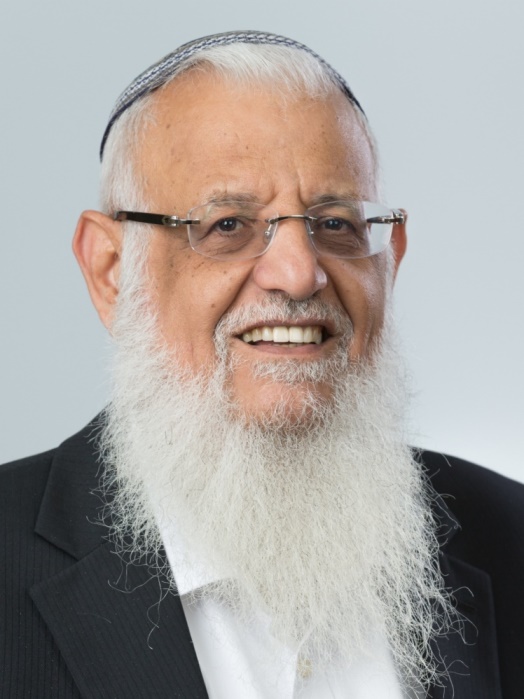
By: Rav Itzchak Jamal
The story is told about the Rabbi of a community in the diaspora who constantly stressed the importance of Aliyah to Eretz Israel in his lectures. Over the course of time, the Rabbi succeeded in inspiring nearly his entire congregation to make Aliyah, and he himself settled here with them.
One day, the Rabbi received a phone call from one of the elder members of the community who was still living in the diaspora. He had a request: he was planning to visit soon in Israel, and he asked the Rabbi if he would be willing to show him the grave of HaRav Kook ZTZ"L, of whom the Rabbi spoke frequently in his discourses.
The Rabbi gladly agreed, and when the elderly man came to Israel, he took him to the grave, and there the man expressed his desire to purchase a gravesite for himself close to the grave of HaRav Kook. The Rabbi laughed and said that not just anyone can buy a gravesite here, and these places are reserved for the great luminaries of the nation. The old man, who was extremely wealthy, persisted and asked the Rabbi to investigate the possibility of purchasing a gravesite as close as possible to HaRav Kook. With tenacious persistence and unrelenting efforts, the Rabbi managed to find him a gravesite close to HaRav Kook which he could purchase.
Several days later, the old man spoke with the Rabbi and said that he was certain that the Rabbi was surprised that he had any interest in being buried next to Rabbi Kook, and probably also didn't understand why he was willing to pay such a high price for this. Therefore, the man explained: Thank G-d, I adhere to the Torah and the Mitzvot, but sadly my children are less observant and my grandchildren are already immersed in gentile society, and I am very worried about the future of my great-grandchildren. However, I am certain about one thing: the great respect they have for me, and I am sure that they will all come to my funeral to and the memorial ceremonies they will conduct in my honor after my passing. And then, when they will come here, perhaps they will see the grave of HaRav Kook, and conceivably some them will be interested in knowing who this Rav was and what he taught, and consequently they will return to Judaism, and to me this is worth all the money in the world.
In our parsha, Yaakov is forced to go down to Egypt, and the Torah recounts that HaShem encourages him not to fear. "And He said, I am the Lord the G-d of your fathers. Do not fear going down to Egypt, as I will make you a great nation there." What is Yaakov's great fear?
The Zohar says that Yaakov is afraid that his progeny will become extinct in Egypt.
"From that which is written: 'Do not fear' – it is apparent that he feared. HaShem said to Yaakov: "as I will make you a great nation there." Yaakov said to Him that he feared that his offspring will disappear. He said: "I will go down with you to Egypt." (Zohar Beshalach 53, 1)
The Beit HaLevi explains that Yaakov was certainly aware of the decree in Brit Bein HaBetarim, and therefore he knew that his offspring were fated to be enslaved by another nation. It can be assumed that Yaakov regarded his going down to Egypt as the beginning of the exile, however Yaakov had hoped that the decree would come to pass in a different country, in one where his children could guard themselves physically and spiritually. However, when Yaakov understands that the decree will transpire in Egypt, the land of depravity, he is very afraid about the future of his generations.
"He thought that the exile would be in another country and not in Egypt, which was defiled and full of idolatry, to the point that the Torah called it (in parshat Miketz) ervat ha'artez (the obscene nakedness of the Earth). And since he realized that the exile will be to Egypt, he feared that his children will not be able to live so many years in Egypt, in bondage, and to retain their holiness – that perhaps they will descend into the depravity of the Egyptians to the point that they will never again be worthy of being redeemed." (Beit HaLevi, Bereshis 46)
Because of this concern, Yaakov and Yosef take a number of steps in order to protect the nation which was in its formative stages, in order to enable it to survive, even in Egypt the land of depravity.
First of all, Yosef asks his brothers to say that they are shepherds in order to arouse the Egyptians' revulsion, and to cause the Israelites to be isolated from the Egyptians, as HaRav Shimshon Rafael Hirsch writes (on Bereshis 46):
"In general, the loathing of the nations for the Jews has been a primary instrument for the survival of this tribe, which is destined to spend its days in solitude. As long as the ethical dawn has not yet shined upon the nations, the barriers which the nations have erected between themselves and Israel have protected it from becoming attached to the corruption of the people its walks among for hundreds of years. For this reason, Yosef immediately makes prominent the aspect which arouses the repulsion of the Egyptians, for a clear purpose – to be designated a special region for their residence."
Another step Yaakov takes is sending Yehuda to establish a house of study, out of the understanding that only an active Beit Midrash, and only connection with the Torah will preserve his offspring as a unique nation and will prevent their assimilation into the goyim.
The third thing Yaakov does is to make Yosef swear that he will bury him in Eretz Israel. Rashi brings several of Chazal's explanations for Yaakov's desire to be buried specifically in Eretz Israel, however I would like to suggest another explanation based upon the story we opened with: Yaakov indeed saw his offspring beginning to mix with the Egyptians, and he saw the power of the diaspora penetrating into the hearts of his grandchildren and great – grandchildren, as the Kli Yakar writes regarding the end of our parsha:
"And B'nei Israel dwelled (in the land of Egypt) in the land of Goshen and they acquired (land in) it, and they increased and multiplied greatly." This entire verse speaks of the guilt of B'nei Israel, since HaShem decreed (upon Avraham) that his offspring will be strangers (ger) and they aspired to be dwellers (toshavim) in a place where they were decreed to gerut (being transitory). The verse casts guilt upon this dwelling, in which they desired acquisition in a land which was not theirs. Did they not say to Pharaoh 'we came to live in the land temporarily (lagur)' meaning that at first they went down not for the purpose of settling there, but only to reside there temporarily like one who rents an apartment? And now they went back on their words, and became so immersed there that they did not want to leave Egypt until HaShem had to take them out with a strong hand." (Kli Yakar 47:27)
Yaakov knows that when he will be buried in Eretz Israel, all his offspring - his sons, grandchildren and great-grandchildren will come for the burial, and on the way they will pass through the places through which the holy patriarchs, Avraham Itzchak and Yaakov passed, and when they will be told what happened to each one of the fathers and what he did there, this will strengthen their connection with the forefathers as well as their Jewish identity and their connection with Eretz Israel. This is what Yaakov wishes to accomplish by way of the long journey to Ma'arat HaMachpela.
In the end, many of B'nei Israel did not want to leave Egypt and became immersed in Egypt's defilement and idolatry, but chamushim (a fifth of) B'nei Israel came out of Egypt. A segment remained faithful and protected their Jewish identity by not changing their names or their garments, and it is probable that this was by virtue of the actions of Yaakov and Yosef, who planted roots in order to preserve the uniqueness of the nation, even during the terrible exile.
May the spirit of Yaakov Saba always illuminate within each and every one of his sons.
Shiur ID: 9600
Do you have a comment or question on the shiur?
Comment below and we'll join the discussion
Add your comments:
.jpg)
.jpg)